Floral Rainbow: A Designer’s Review for Small Business Merch
As an embroidery designer who has spent years digitizing and testing files for commercial use, I approach every new machine embroidery design with a critical eye. It is not just about whether a motif looks pretty on a screen; it is about how it performs on fabric, how it holds up in the wash, and most importantly, how it serves a brand. Recently, I reviewed Floral Rainbow, a design marketed primarily for nursery fabrics. While its initial description suggests a sweet, decorative accent for baby items, my assessment focuses on its viability for small business merchandise, branded patches, and custom apparel.
First Impressions: Visual Personality and Brand Fit
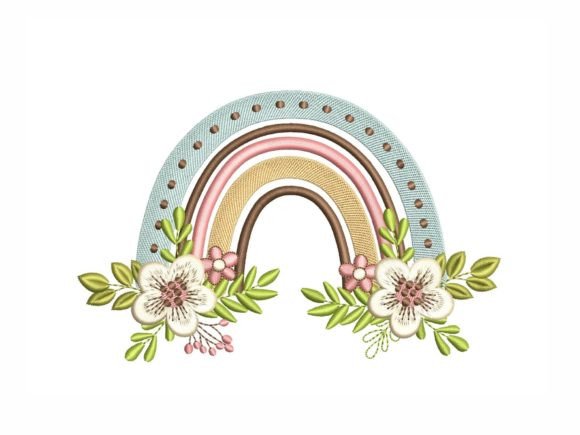
The first thing that strikes you about Floral Rainbow is its inherent friendliness. The combination of floral elements with a rainbow arc creates a visual language that is playful, soft, and inviting. For businesses in the childcare, education, or family-oriented sectors, this aesthetic is gold. However, for a broader range of small businesses—such as boutique cafés, florists, or creative studios—the design offers a "handmade" charm that can differentiate a brand from sterile, corporate competitors.
The design feels less like a rigid corporate logo and more like a stamp of authenticity. When I visualize this as an embroidered patch or a chest logo on a staff uniform, it communicates approachability. It tells the customer that the business values warmth and care. This is crucial for brands trying to build trust through visual consistency. If your brand identity relies on being perceived as artisanal, local, or nurturing, Floral Rainbow aligns perfectly with those values.
Real-World Applications for Small Business Merch
Beyond the nursery context, I see significant potential for Floral Rainbow in various small business merch categories. Here is how I would deploy this design in a commercial setting:
- Staff Uniforms and Aprons: For a bakery or a flower shop, embroidering this design on the chest pocket of an apron embroidery project adds a delightful touch. It breaks the monotony of plain uniforms and serves as a conversation starter with customers.
- Tote Bags and Packaging: As a tote bag design, it works beautifully as a central motif or a corner accent. Customers love reusable bags that feel special rather than promotional. This design elevates a simple canvas bag into a desirable accessory.
- Branded Patches: One of the most versatile uses is creating iron-on or sew-on patches. These can be sold as add-ons or used to brand limited-edition products. The contained nature of a rainbow shape makes it ideal for patch production, provided the edges are finished with a satin stitch or merrowed border.
- Cap Embroidery: Placing a simplified version of this design on the front or side of a cap can create a trendy, retro-inspired look. Cap embroidery requires careful attention to curvature, but the organic lines of flowers can adapt well to the rounded surface of a baseball cap.
Technical Considerations and Production Challenges
While the aesthetic appeal is strong, any professional embroiderer knows that beauty must be backed by technical stability. Before running a large batch of commercial embroidery, there are several factors to evaluate with Floral Rainbow.
First, consider the stitch density. Floral designs often involve intricate details and varying thread directions. If the density is too high, the fabric may pucker, especially on lighter materials like cotton tote bags or thin apron fabrics. Conversely, if the density is too low, the underlying fabric might show through, compromising the vibrancy of the rainbow colors. I always recommend running a test stitch-out on the exact fabric you intend to use for the finished product.
Second, think about thread colors. The rainbow element implies a multi-color design. In embroidery, each color change adds time and complexity to the production process. For small business owners managing their own machines, this means planning for efficient thread paths. For those outsourcing, it affects the cost per unit. Ensure that the contrast between the floral elements and the rainbow arcs is sharp enough to be distinct but harmonious enough to feel cohesive.
Third, pay attention to the hoop size and placement. The product description notes that the file comes in multiple formats, but it does not specify exact dimensions. You must verify that the design fits within your standard hoop sizes without requiring excessive re-hooping, which can lead to misalignment. For small patches, ensure the details do not become muddy when scaled down. Tiny petals and thin rainbow bands can lose definition if the design is shrunk below a certain threshold.
Navigating Fabric Texture and Stabilization
The success of Floral Rainbow heavily depends on the substrate. On smooth, woven fabrics like twill or high-quality cotton, the design will likely crisp up nicely. However, on textured fabrics like terry cloth towels or fuzzy fleece, the fine details of the flowers might get lost. In such cases, I advise using a cut-away stabilizer to provide a firm foundation that prevents the stitches from sinking into the pile.
For dark uniforms or black tote bags, you must consider underlay stitching. A bright rainbow needs a solid white or light-colored underlay to pop against dark fabric. Without this, the colors may appear dull or muted. Always create a printable mockup or a digital proof to show clients how the colors will interact with their specific garment choices before committing to production.
Enhancing Brand Identity and Customer Trust
Using a consistent design asset like Floral Rainbow across various touchpoints strengthens brand identity. When a customer sees the same charming motif on your website, your packaging, and your staff’s aprons, it creates a sense of professionalism and attention to detail. This visual consistency builds recognition and trust.
Moreover, in the era of mass-produced goods, handmade touches stand out. An embroidered item feels premium and personal. By incorporating this design into your custom apparel or product labels, you signal that you value quality and craftsmanship. This perception allows small businesses to justify higher price points and fosters deeper emotional connections with buyers.
Practical Steps for Implementation
If you are considering adding Floral Rainbow to your library of design assets, follow these steps to ensure a smooth workflow:
- Verify File Formats: The description mentions multiple embroidery file formats. Confirm that the package includes the specific format compatible with your machine (e.g., PES, DST, JEF) to avoid conversion issues that can distort stitch data.
- Check Licensing: Before using any digital embroidery file for commercial purposes, review the license terms. Ensure you have the right to sell items featuring this design, not just use them for personal projects.
- Test on Sample Fabric: Never skip the test stitch. Run the design on a scrap piece of your actual inventory fabric. Check for puckering, thread breaks, and color registration.
- Evaluate Scalability: Test the design at its smallest intended size. If you plan to use it on small tags or narrow hat brims, ensure the details remain legible.
- Create Marketing Mockups: Use high-quality photos of your test stitches to create marketing materials. Show the design in context—on a folded apron, a hanging tote, or a worn cap—to help customers visualize the value.
In conclusion, Floral Rainbow is more than just a cute nursery motif. With careful technical execution and strategic placement, it serves as a powerful tool for small businesses looking to infuse their merchandise with warmth and personality. Whether used for embroidery on staff uniforms, branded patches, or customer gifts, it offers a blend of charm and professionalism that can enhance your brand’s market presence. Just remember to respect the technical constraints of embroidery, choose your materials wisely, and always prioritize quality control in your production process.